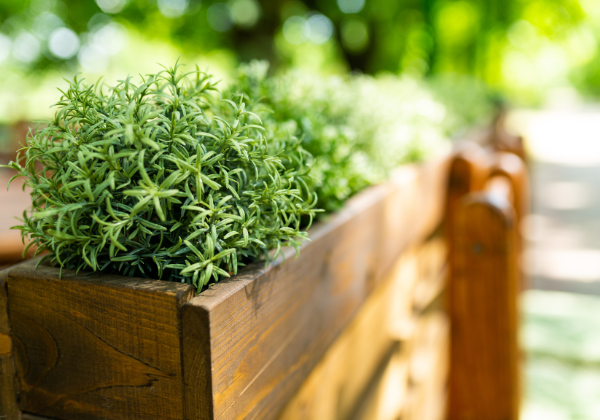
Growing Thyme: The Drought-Tolerant Herb That Thrives on Neglect
Thyme is one of those herbs that quietly does everything — it perfumes the garden, it tucks into nearly every savory dish I cook, and it asks for almost nothing in return. Growing thyme is one of the easiest wins in my garden. It’s a low mat of tiny, fragrant leaves that thrives in the kind of dry, rocky soil that makes other plants sulk, and it has earned a permanent spot along the sunniest edge of my herb bed.
If you’re new to growing thyme, here’s the secret: most of us don’t lose it by neglecting it. We lose it by loving it too much. Here’s everything I’ve learned about growing thyme on the Emerald Coast, from picking a variety to harvesting, drying, and cooking with it.
What Is Thyme?
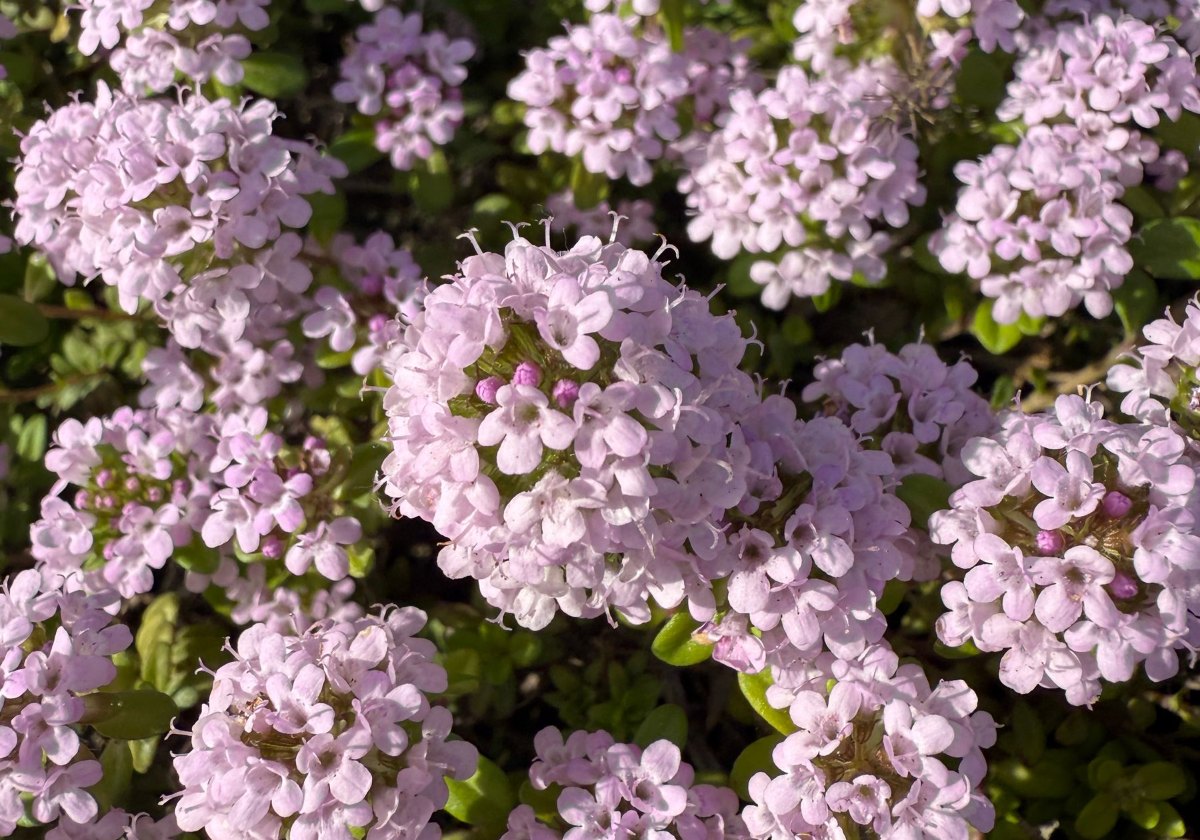
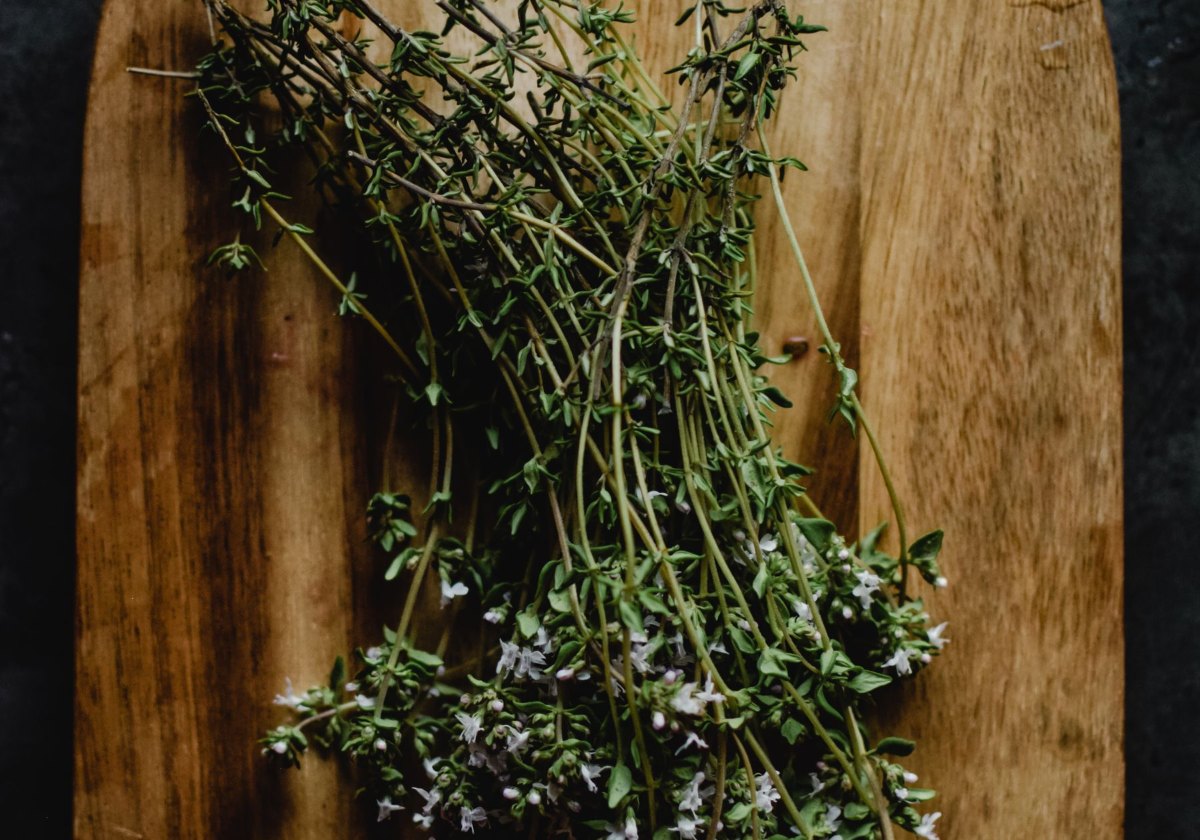
Thyme (Thymus vulgaris) is a low-growing, woody-based perennial native to the Mediterranean and a member of the mint family. It forms a spreading mound 6 to 12 inches tall, and its tiny leaves carry an earthy, slightly minty aroma. In late spring and early summer, it’s covered in small pale purple, pink, or white flowers that pollinators can’t resist. Beyond common thyme, there are dozens of varieties to play with — lemon thyme, creeping thyme, and caraway thyme are a few of my favorites — each with its own twist on the classic flavor.
Why Grow Thyme?
For Your Kitchen
Thyme is a cornerstone of French and Mediterranean cooking. It’s one of the essential herbs in a classic bouquet garni and herbes de Provence, and it pairs beautifully with roast chicken, soups, beans, and root vegetables. It’s also one of the few herbs that holds its flavor through long, slow cooking, so it’s my go-to for anything that simmers.
For Your Cocktail Garden
Lemon thyme in particular is a sleeper hit behind the bar. A sprig adds a bright, herbal note to a gin and tonic or a lemonade, and it makes a gorgeous simple syrup for cocktails and mocktails. I walk through the method in my guide to herb-infused simple syrups.
For Your Garden Ecosystem
When thyme flowers, the bees find it fast. It’s also a helpful companion plant: tuck it near cabbage-family crops and strawberries, where it’s said to help deter cabbage worms. And for fellow dog parents, thyme is on the ASPCA’s list of plants that are non-toxic to dogs and cats. That makes it one of the herbs I don’t think twice about planting where Byron likes to wander.
Growing Thyme: What You Need to Know
Sun & Soil
Thyme wants full sun and, above almost everything else, excellent drainage. It’s hardy in USDA zones 5 through 9 and actually performs best in soil that’s sandy, rocky, and on the lean side. Rich, moisture-retentive soil is the quickest way to lose it to root rot.
Planting
Thyme germinates slowly and unevenly from seed, so I always recommend starting with a nursery plant, a rooted cutting, or a division from a friend’s garden. Space plants 12 to 18 inches apart so air can move freely around the foliage, and work some coarse sand or fine gravel into heavy soil before planting.
Watering
Water only when the soil has dried out. The biggest threat to thyme isn’t pests, it’s overwatering. Soggy soil and root rot are the number one way gardeners lose this plant (it made my list of common herb garden mistakes for a reason), so when in doubt, let it go dry.
Pruning & Care
Skip the fertilizer. Lean conditions are exactly what thyme wants, and extra nitrogen just produces weak, floppy growth with less flavor. Trim plants back lightly after flowering to keep them bushy, and plan to replace them every three to four years once the woody center starts to outpace the fresh growth.
Growing Thyme in Florida
Here on the Emerald Coast, thyme’s real challenge isn’t our heat, it’s our humidity and those afternoon summer downpours. A few things make all the difference:
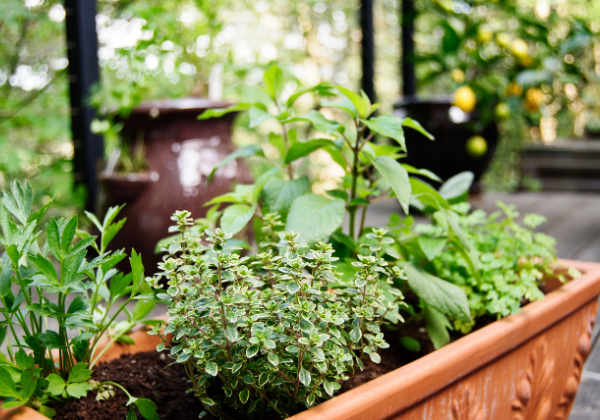
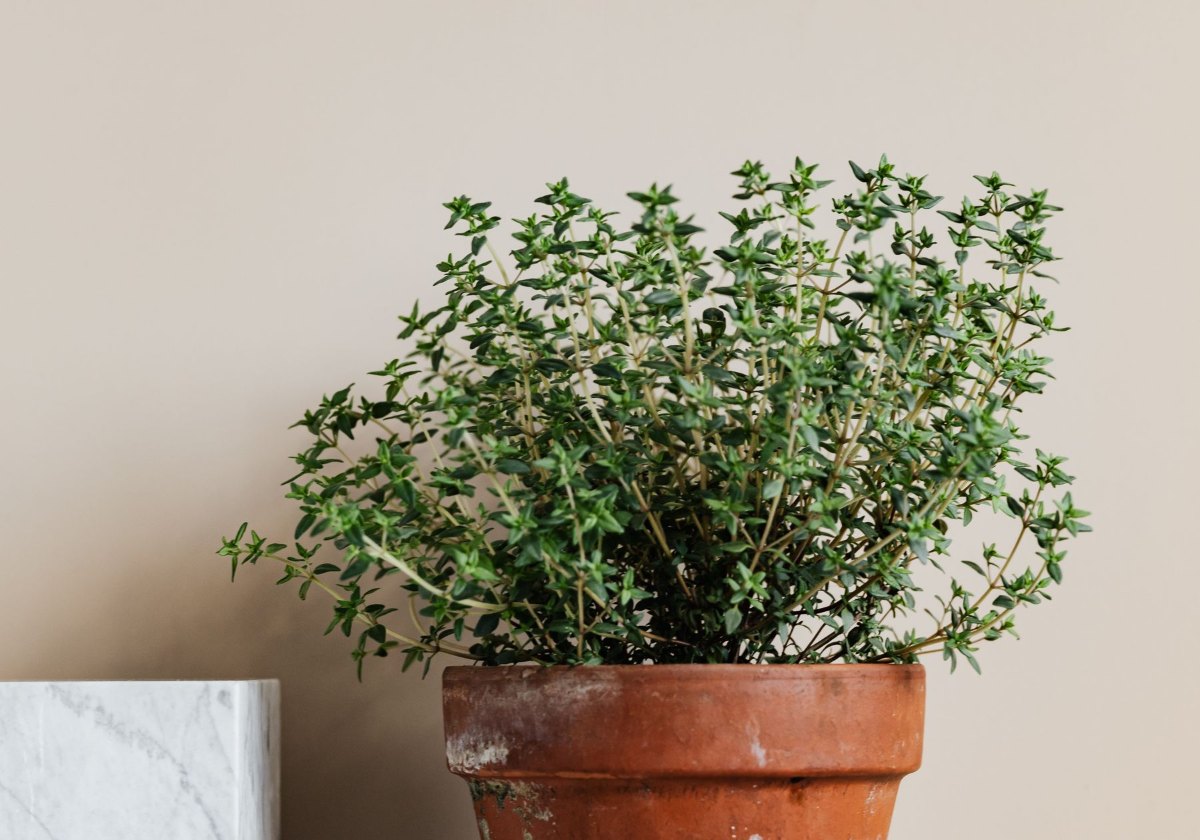
- Grow it in a raised bed or a container where water drains fast. Terracotta is ideal because it breathes. (Here’s my full list of the best herbs for container gardening.)
- Mulch with a thin layer of gravel instead of bark or straw so the crown stays dry.
- Give each plant plenty of room so air can circulate through the foliage.
- Plant in fall or early spring. Thyme is happiest in our cooler months, and it can look a little tired by late August. Don’t panic, because a fall trim usually brings it right back.
Harvesting Thyme
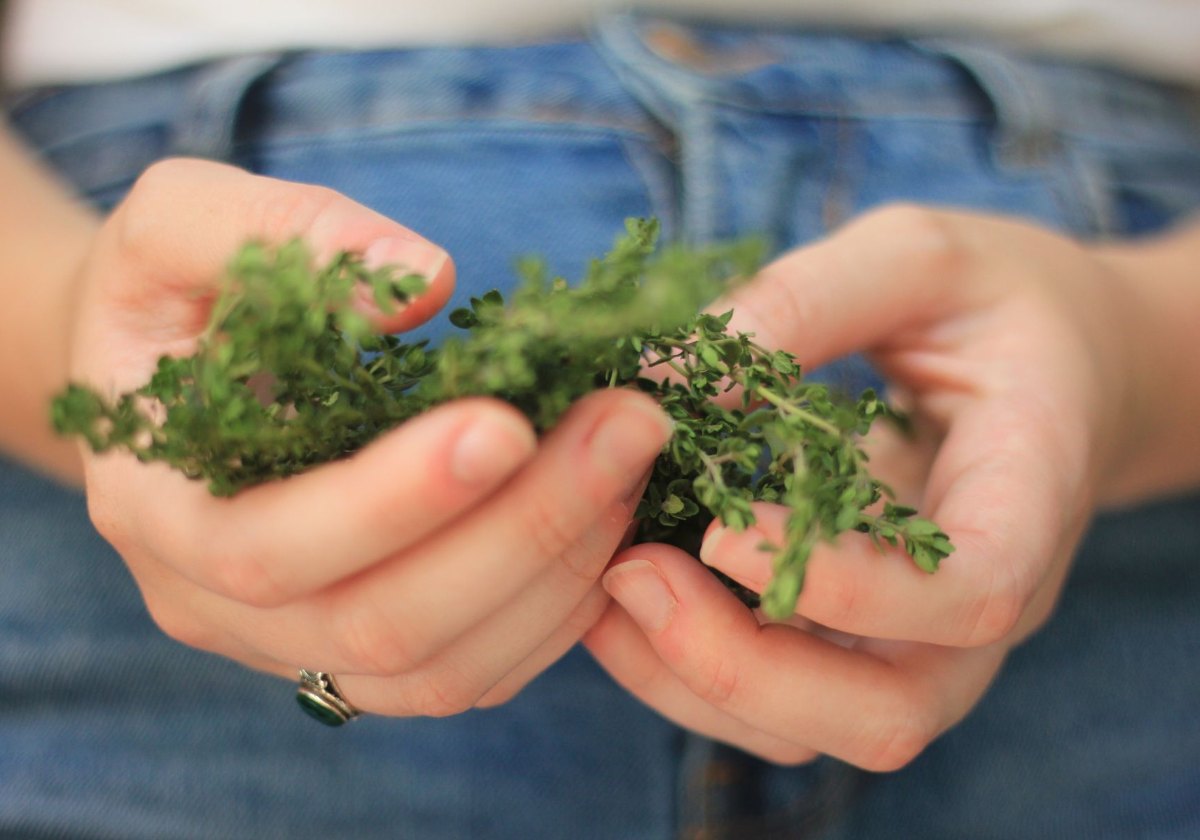
Snip stems any time after the plant is established, ideally in the morning once the dew has dried. For peak flavor, harvest most heavily right before the plant flowers. Never take more than about a third of the plant at once, and it will keep producing all season.
Drying & Storing Thyme
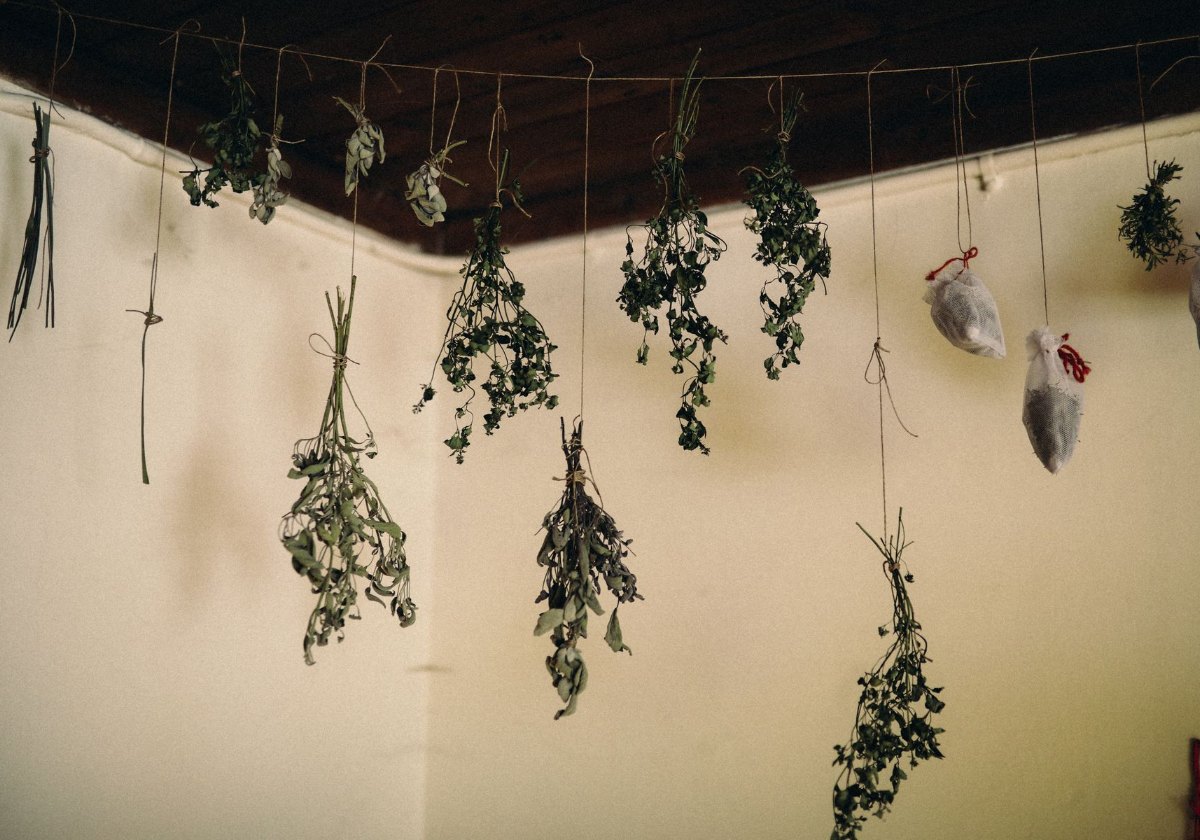
Thyme dries beautifully on the stem, and it’s the herb I dry the most. Bundle a few sprigs with twine, hang them somewhere warm and dry, then strip the tiny leaves once they’re crisp and store them in an airtight jar. Fresh sprigs will also keep for about a week in the refrigerator, wrapped loosely in a damp paper towel.
How to Use Thyme
- Tuck whole sprigs under the skin of a roast chicken
- Toss with olive oil and root vegetables before roasting
- Add to soups, stews, and slow-simmered beans
- Bundle with parsley and bay leaves for a classic bouquet garni
- Infuse lemon thyme into simple syrup for cocktails and mocktails
- Steep a few sprigs in hot water with honey for a soothing tea
Medicinally, thyme’s active compound, thymol, has antiseptic properties and shows up in cough drops, mouthwash, and traditional remedies for colds and sore throats. It’s a nice reminder that the herbs in our gardens have been doing double duty for centuries.
Companion Herbs to Grow Alongside Thyme
Thyme loves the same sunny, well-drained spot as its Mediterranean cousins. If you’re building out your herb garden, check out my profiles on rosemary, sage, lavender, and tarragon. They’re all excellent neighbors with the same easygoing needs. (Just keep mint in its own pot, because it plays by very different rules.)
The Bottom Line on Thyme
Thyme is the herb I reach for constantly and think about the least. It just grows, quietly and reliably, in the driest, sunniest corner I have. There’s something so satisfying about a plant that thrives specifically where other things struggle, and that’s a lesson worth growing, too.
If you’re looking for an easy win in your herb garden, start with one nursery plant in a sunny, well-drained spot, keep the watering can at a distance, and snip often. Before long, you’ll be tucking fresh thyme into everything.
Do you have a favorite thyme variety, or do you stick with the classic? Drop a comment below and tell me what’s growing in your garden, or tag me @cultivateandnavigate. And if you found this guide helpful, save it to your herb garden board on Pinterest!